


The right pet scale is something you don’t really notice day-to-day, but its results impact many major decisions you’ll make as a veterinarian when providing care. So, when you need a new pet scale, which one do you choose? We can help.
Why the Right Pet Scale Matters in Veterinary Practice
Why is the right pet scale such an important decision?
Medical Decision Making
An animal’s weight is one of the biggest contributing factors in their care. It affects how much medication they get prescribed, how much anesthetic they get during surgery and how their health is evaluated throughout their life.
For smaller pets, even a half kilogram difference can affect dosing, so choosing the right pet scale is critical. A one-kilogram kitten and a one-and-a-half-kilogram kitten may look the same visually, but their weight matters enough to receive different doses of certain medications. If one kitten is given an incorrect dose because of results from an inaccurate pet scale, there may be unintended consequences.
Reducing Stress
It’s a well-known fact that many pets don’t enjoy going to the vet for regular check-ups, which is why the process should be made as stress-free and easy as possible. Your weighing scale isn’t exempt! The right weighing scale will gather weight data quickly and effectively, so you can get the information you need without the animal becoming more stressed in the process. What does that look like? It could be ensuring the weighing scale has a texture so they don't slide, a blanket tared off so they're comfortable, or even that it offers functions that help reduce the amount of animal handling necessary during weighing.
Solving the “Moving Target” Problem
Animals at the vet don’t realise how much would be easier if they’d just stay still! Weighing included. For many weighing scales, an accurate result requires the subject to stay still for the stabilisation period, which can be anywhere from one to five seconds. In puppy world, that’s forever! Luckily, certain Adam pet scales like the feature a dynamic weighing function.
Dynamic weighing is a function on a weighing scale that allows you to set a time span, such as five seconds, during which the weighing scale will calculate the average weight on the pan. That way, the animal doesn’t have to be completely still for you to receive an accurate weighing result, saving time each appointment.
Other pet scales, like Adam’s and , offer a Hold function, which can be even more helpful. The Hold function works similarly to dynamic weighing in that it takes the average weight over a set time, waiting until it gets as close to stable as possible. The best part is, it then freezes that result on the display. This gets you a more accurate reading than dynamic weighing, which takes the average of ANY fluctuations, even wild ones. You can also handle the pet and move them to another location before needing to worry about recording the results. This prevents rushing, allowing you to keep calm for the animals.
Choosing a Pet Scale for All Sizes
Your veterinary practice may require multiple different sizes of pet scales depending on your typical clientele. You’ll need to be prepared to accurately weigh any animal, from a parrot or guinea pig to a snake or mastiff with ease. For those who have the capacity, you may find yourself weighing goats, horses or even alpacas! You need the right pet scale for each.
Small Animals
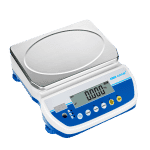
Weight really comes into play care-wise with small animals. Dosages get more precise and the consequences of weighing inaccurately get steeper. A scale like Adam’s is the perfect solution. It offers a 180x245mm weighing pan, a hold function and a readability of 0.5g on certain models, perfect for small critters.
Medium Animals
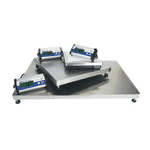
For cats or small to average sized dogs or pets, a scale like Adam’s would be effective, with its square 500x500mm platform. Designed flat and with a detachable indicator, it can be used on a counter or the floor for your convenience.
Large Animals
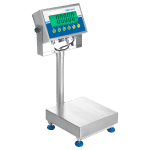
For large dogs, sheep, goats or other hefty pet friends, a CPWplus L is an ideal platform size with capacities up to 300kg. Pair with Adam’s non-slip rubber mat accessory to give pets a better grip on the stainless-steel platform – with the ability to take it off and give it a rinse if necessary.

Extra-Large Animals
Horses are pets too and often weigh much more than 300kg. For veterinarians specializing in equine care, you’ll need to pull out the big guns. Adam’s PT platforms offer pan-sizes up to 1500x1500mm, with capacities up to 4500kg. When it’s paired with the waterproof AE 403 indicator, you can use the dynamic weighing function for accurate results if the equine won’t remain perfectly still.
Need tips for ensuring an accurate weighing result? Read our blog here.
Ideal Features for Pet Scales
When shopping around for the right pet scale, keep in mind these five features that make the veterinary process easier:
Portability
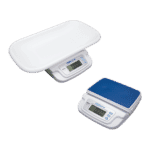
Not all veterinary practices make house calls or travel, but if yours does, a portable scale is a must. A portable scale is one that runs on rechargeable or regular batteries, so you can use it without access to electricity. Adam’s , Latitude LBX and MTB Digital Scales are all battery operated for use on the go. Plus, the MTB offers a removable cradle for extra versatility.
Durable and Easy to Clean
Animals can be rough and messy, so you want a pet scale that can withstand it all. We recommend a scale constructed from either stainless steel or ABS plastic, both scratch and dent resistant so you can use them for longer. Plus, both are resistant to rust and corrosion, with stainless steel bacterially resistant, and are easy to clean!
Adam is the answer for pet scales that your veterinary practice can rely on. Have questions? We can help. Contact Adam now.