

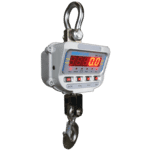
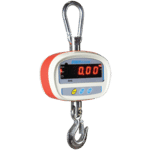
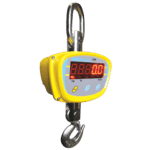

On a busy day in the warehouse, you want to streamline your workflow as much as possible – a digital crane scale can help. Digital crane scales like Adam’s , and free up floor space, provide immediate weight data and help support LOLER-compliance. Let’s discuss.
Unlocking Maximum Floor Efficiency with a Digital Crane Scale
The great thing about digital crane scales is that they don’t have to be used on a crane. They’re ideal for hanging from hoists, gantries and beams in warehouses as well. Because space in warehouses can quickly become a commodity, maximising the efficiency of your warehouse floor is critical. Here’s how crane scales help:
Reduce Handling Steps
Moving goods from one place to another in the warehouse can often become a bottleneck because there’s only so much space to manoeuvre. Having to move the items to a separate weighing location and unload them on the floor is an unnecessary step. With a digital crane scale, you can weigh loads during the lifting process without transferring them to a separate scale.

Free up Floor Space
Without a crane scale, your only other option might be a large platform scale like Adam’s or a pallet jack scale like the . The PT is excellent for weighing pallets or large goods, but it does take up quite a bit of floor space to do so and isn’t as effective with abnormally shaped items. The PTSplus lets you transport and weigh at the same time but work best with items packed on a pallet.
Crane scales free up that floor space and can handle abnormally shaped goods with ease, such as steel rods that may roll of a platform scale. They’re significantly smaller while able to hold the same amount, if not more, weight. You can even just leave it suspended in the air when it’s not in use – no floor space taken up then!
Get Weight Data on your Digital Crane Scale Immediately
If you need to pick up and move your goods to a separate location to weigh them, you’ll have no idea whether the load surpasses the Safe Working Load (SWL) of your forklift or carrying method. You’re then risking the faster deterioration or even complete destruction of your equipment, which would obviously become a delay to your regular operations. By combining lifting and weighing, you’ll know the weight immediately – including if the weight is too high.

Short Learning Curve
A digital crane scale doesn’t always need to be complicated or difficult to use – in fact, the easier it is to use, the more people can learn to operate it both safely and effectively. Adam crane scales offer a simple four-button interface, as well as separate remote controls so you can zero, tare, Hold, change division or turn on/off from a distance.
Want to learn more about hanging scales? See our blog here.
Safety and LOLER-Compliance with Your Digital Crane Scale
LOLER stands for Lifting Operations and Lifting Equipment Regulations. When working with cranes or other lifting equipment in the UK, LOLER helps keep workers safe.
What LOLER requires
LOLER regulations state that “all equipment used for lifting is fit for purpose, appropriate for the task, suitably marked and … subject to statutory periodic ‘thorough examination’”. Since Adam crane scales are used as part of a lifting assembly and support suspended loads, they’re subject to these requirements as well.
Fit for Purpose & Appropriate for the Task
To be fit for purpose and appropriate for the task is a shared responsibility between you, the user, and us, the manufacturer. It’s your responsibility to purchase a crane scale suitable for your weighing tasks – if you’re weighing 5000kg items, don’t purchase and plan to use a scale with a capacity of 2500kg. However, it’s Adam’s (and any manufacturer’s) responsibility to guarantee that we’re being transparent about the scale’s features and limits, so you can make an informed purchasing decision.
To learn more about how Adam’s crane scales promote safety, read our blog here.
Suitably Marked
By “suitably marked,” LOLER specifies that the equipment should clearly display their ‘safe working loads,’ or SWL, which is the maximum weight that the equipment can lift safely. Adam Crane Scales always clearly states their capacity on the front, above the display.

For example, the IHS above has a max capacity of 5000kg. This is purposefully lower than the ultimate overload limit provided in the user manual, which is 6250kg, or 125%. This gives a 1,250kg buffer between max and ultimate capacity, when we can no longer guarantee the structural integrity or safety of the scale.
Thorough Examination
According to LOLER guidelines, your digital crane scale should undergo a thorough examination before its first use and then regularly thereafter, before installation or reinstallation, and if it’s undergone conditions that could have caused it to deteriorate. For example, if the scale got run over by a lorry or dropped from a great height.
Because crane scales require regular calibration to stay accurate over time anyways, which is separate from LOLER requirements, we recommend pairing the two schedules – every time you thoroughly check the scale, calibrate, or vice versa!
Reducing Manual Handling
In-the-air operations are typically more dangerous when moving up or down in the air. It requires that the people working below are very attentive to what’s happening above them. So, ideally, you won’t need to move up or down very often. Because Adam’s SHS, LHS and IHS crane scales all come with battery powered remote controls, you can operate the scale from a safe distance away, reducing the need to be manually handling the goods and the scale.
Choosing the Right Digital Crane Scale for a UK Facility
So, what’s the ideal digital crane scale for your facility? It depends on a few different factors.
Weight Capacity
The biggest determining factor in which digital crane scale you select should be the capacity you need it to handle. Adam offers three crane scales with varying capacity ranges:
- SHS - 50kg to 300kg
- LHS - 500kg to 2000kg
- IHS - 1000kg to 10000kg
This range covers most of what you might need to weigh in a typical warehouse environment. In general, the goal should be to invest in a scale with a capacity of at least 25% more than the highest weight you would anticipate needing to weigh regularly. For example, if you regularly weigh containers of about 7,500kg, a capacity of 10000kg would be suitable.
If you’re weighing a wide range of items, you may end up needing more than one scale with different capacities. This is because the same scale that weighs 7,500kg with ease may not provide precise enough results when weighing 200kg.
Durability
The second biggest consideration should be how durable it is. If it’s lifting heavy weights in the air, you certainly don’t want a flimsy scale. All Adam crane scales boast chrome-plated steel hooks that swivel to prevent them from tension caused by spinning items. The LHS features cast aluminium magnesium indicator housing, while the SHS offers polycarbonate housing and the IHS boasts metal diecast construction. They’re all sturdy and designed for heavy duty work!
Hold Feature
A hold feature is extremely helpful on crane scales. With the hold feature, you can get a result and freeze it on display. That way you don’t have to feel rushed to record it before it goes away, and you can focus more on lowering or raising the load safely.
Need help choosing between Adam’s IHS, SHS or LHS digital crane scales for your warehouse? We can help you find the answer. Contact our team today.
Adam Equipment accepts no liability for misuse, overloading or failure to follow the user manual or applicable regulations. Inspect and maintain your crane scale regularly to help ensure safe, accurate operation.